
Instrument Rating
Fly through the weather.
Master the clouds. The rating that makes a Cirrus a real travelling aircraft: Group 3, in the SR20 G7+.
At least 40 hoursUp to 20 in a simulator
Why it matters
The flight deck, used as designed.
Fly in cloud
File instrument flight plans and fly through cloud, with confidence.
The whole flight deck
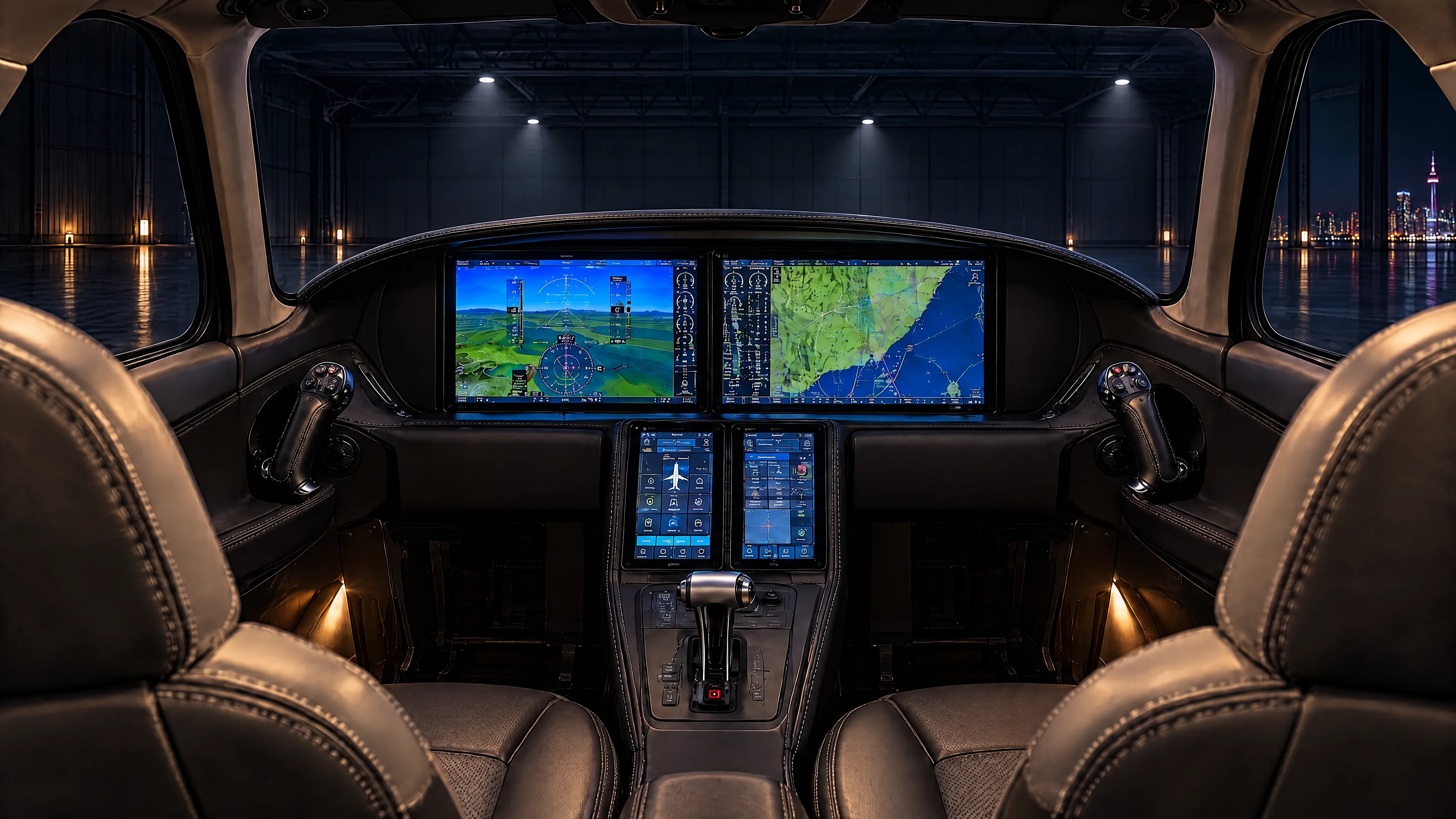
Fly precisely on the Garmin Perspective Touch+, the way it was designed to be flown.
Sharper on every flight
Instrument training builds a precision you use on clear days too.
Before you start
What Transport Canada asks for.
Your licence
A Private Pilot Licence or higher, with its medical. Whether you also need a hearing test (audiogram): TBC
Cross-country time
At least 50 hours as pilot-in-command on cross-country flights, 10 of them in aeroplanes. Most new private pilots build time first; we'll plan it with you.
The written exam
The INRAT, with a pass mark of 70%.
The program
Four steps into the clouds.
- 01
Ground school
Then the INRAT written exam.
- 02
Instrument flying
At least 40 hours, up to 20 of them in an approved simulator (Aspen's simulator is $195 an hour; whether its hours count toward the rating: TBC). Includes a 100 nm IFR cross-country with approaches at two airports.
- 03
Flight test
Fly the test with an examiner, and the rating is yours.
- 04
Staying current
A flight test or proficiency check every 24 months, and 6 approaches in the last 6 months. We can help with both.
The estimate
Every cost, in plain sight.
| All 40 hours in the aircraft | 20 in the aircraft, 20 in a simulator | |
|---|---|---|
| Aircraft, SR20 G7+ at $695 an hour | 40 hours$27,800 | 20 hours$13,900 |
| Simulator, $195 an hour | None | 20 hours$3,900 |
| Instructor, $195 an hour, in the aircraft and the simulator | 40 hours$7,800 | 20 + 20 hours$7,800 |
| Ground school, exam and flight test fees | TBC | TBC |
| Estimated total | $35,600 + TBC | $25,600 + TBC |
- The aircraft rate is wet: fuel included. Insurance and Billy Bishop fees: TBC
- The estimate assumes an instructor for every hour; your instructor will confirm your plan.
- Cross-country time-building before you start, if you need it: TBC
- Training in your own Cirrus: TBC